


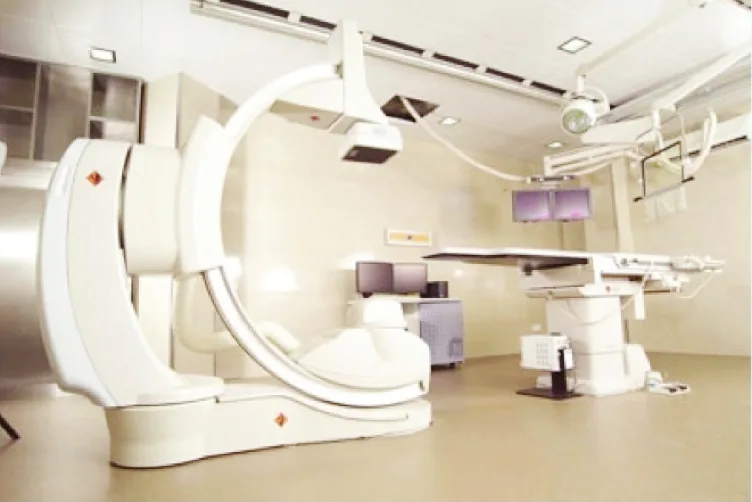
Cath Lab: Another Option for Heart Diagnosis and Treatment
Medical innovations for heart disease treatment continue to advance. The Cardiac Catheterization Laboratory (Cath Lab) is a specialized facility for examining the heart and coronary arteries through cardiac catheterization. This is one of the key developments in modern diagnostic systems, providing more standardized examinations and improving accuracy for diagnosing heart and coronary artery diseases—especially coronary artery disease (CAD).
When Is Cardiac Catheterization Needed?
If you have chest pain lasting longer than 5 minutes, severe fatigue, sweating, dizziness, nausea, pain radiating to the arm, or shortness of breath, you should seek medical attention immediately. Doctors will assess whether the symptoms may be caused by a blocked coronary artery, how serious the condition is, and whether urgent treatment is required.
In many cases, doctors may order additional tests such as:
- CT scan
- Electrocardiogram (ECG)
- Echocardiography (heart ultrasound)
- Blood tests
- Other diagnostic evaluations
Once the test results confirm a coronary artery blockage, cardiac catheterization is performed to evaluate the condition of the coronary arteries and to plan appropriate treatment.
Most patients who undergo coronary artery evaluation are at higher risk of developing future heart disease and may have a higher risk of sudden complications. Therefore, treatment planning is important in order to prevent life-threatening events such as heart attack and other cardiovascular problems.
How Is Cardiac Catheterization Performed?
After the doctor confirms coronary artery disease, and determines that catheterization can improve blood flow, a catheterization procedure may be recommended.
During the procedure, a physician inserts a thin catheter into a blood vessel—commonly through the groin or wrist. The catheter is small, approximately 1.5–2 millimeters in diameter, and is advanced through the blood vessels to the coronary arteries. A contrast agent is used to visualize blood flow and detect narrowing or blockage, allowing the doctor to evaluate the coronary arteries and make a diagnosis based on the results.
Advantages of Cardiac Catheterization
Cardiac catheterization can help diagnose disease without major surgery. It is a fast procedure and most patients can return to daily activities normally. The risks are lower compared to open surgery, the wound is small, and hospital stay is typically short.
Limitations of Cardiac Catheterization
This test may not be suitable in certain cases, such as:
- Severe coronary artery blockage
- Very complex conditions
- Extensive calcification
- Multiple or complicated narrowed segments
In some situations, treatment results may not be as effective as expected.
Elderly Patients and Cardiac Catheterization
Many people ask whether elderly patients can undergo cardiac catheterization. Doctors report that even patients aged 81 years can receive treatment successfully.
For example, an 81-year-old patient with symptoms of fatigue due to blocked coronary arteries also had conditions such as diabetes, high blood pressure, and high cholesterol. After the catheterization procedure, the coronary artery condition improved. The patient recovered well, returned to normal daily life, and had a good quality of life.
In many cases, elderly patients experience issues such as shortness of breath and difficulty walking. If they receive proper treatment, they may return to normal daily activities. Treatment guidelines often include three main approaches:
- Medication
- Cardiac catheterization
- Surgery
In this case, after treatment and follow-up, the patient underwent cardiac catheterization. A stent was placed in two coronary arteries to restore blood flow and improve treatment outcomes. The patient and medical team were satisfied with the results.
Source: http://www.phyathai.com/medicalarticledetail/1/4/36/th


